Your Filter Part Is Not a Consumable. It Is a Line of Defense.
Western Separations™ Resource Series
A filtration or separation component is not just a small part. It may be protecting your equipment, flow, product quality, uptime, and confidence. Learn why custom screens, baskets, filter elements, and perforated tubes should be treated as critical lines of defense in your operation.
Why the right filtration and separation component protects more than the process — it protects your equipment, uptime, quality, and peace of mind.
Some parts get treated like small purchases.
A screen.
A basket.
A filter element.
A perforated tube.
A strainer.
A mesh component.
A small stainless part inside a larger system.
It gets cleaned.
It gets reused.
It gets replaced.
It gets ordered when needed.
And because it may be smaller than the pump, vessel, line, machine, or control system around it, it can be easy to think of it as just another consumable.
But that may be the wrong way to look at it.
A filtration or separation component is not just a part.
It is a line of defense.
It may be protecting your pump.
It may be protecting your valves.
It may be protecting your analyzer.
It may be protecting your product quality.
It may be protecting your operators from unnecessary maintenance issues.
It may be protecting your schedule from unplanned downtime.
It may be protecting your customer from a bad batch, delay, or performance problem.
That small part may be doing more work than anyone gives it credit for.
At Western Separations™, we help companies source, duplicate, and manufacture custom filtration and separation components built around real process needs.
But before we talk about parts, let’s talk about protection.
Because when you see the part differently, you manage it differently.
And when you manage it differently, your operation gets stronger.
The Small Part Before the Expensive Problem
In many industrial systems, filtration and separation components sit quietly between a problem and something expensive.
A strainer may sit before a pump.
A screen may sit before a valve.
A filter element may sit before an analyzer.
A basket may collect debris before it travels downstream.
A perforated tube may support flow, media, or separation inside a process.
A custom metal component may hold the whole function together.
When the part is working, nobody notices.
The process flows.
The pump runs.
The equipment stays protected.
The maintenance schedule stays manageable.
The product stays consistent.
The team moves on.
But when that part is wrong, worn, clogged, missing, cracked, corroded, or poorly matched, the problem rarely stays small.
It travels.
A bad screen can become debris downstream.
A poor fit can become bypass.
A clogged element can become pressure drop.
A weak basket can become failure under service.
The wrong material can become corrosion.
A missing spare can become downtime.
A “close enough” replacement can become repeated maintenance.
That is the hidden truth:
The cost of the part is not the same as the cost of the problem it prevents.
That is why the right component matters.
The Light Bulb: Filtration Is Not Only About What You Remove
Most people think filtration is about removing something unwanted.
And it is.
Particles.
Debris.
Contamination.
Solids.
Moisture.
Unwanted material.
Process byproduct.
But that is only half the story.
Filtration is also about what you protect.
What are you protecting downstream?
A pump?
A valve?
A heat exchanger?
An analyzer?
A customer specification?
A product stream?
A batch?
A process line?
A critical piece of equipment?
A maintenance schedule?
A team’s ability to operate with confidence?
That question changes the conversation.
Instead of asking:
“What filter do we need?”
Ask:
“What are we protecting, and what happens if it is not protected?”
That is the better question.
Because once you know what is being protected, you can make a smarter decision about the component.
You can think about fit.
You can think about material.
You can think about open area.
You can think about flow.
You can think about cleanability.
You can think about failure history.
You can think about whether a standard part is enough or whether the application needs something custom.
The part is not just there to catch something.
It is there to defend something.
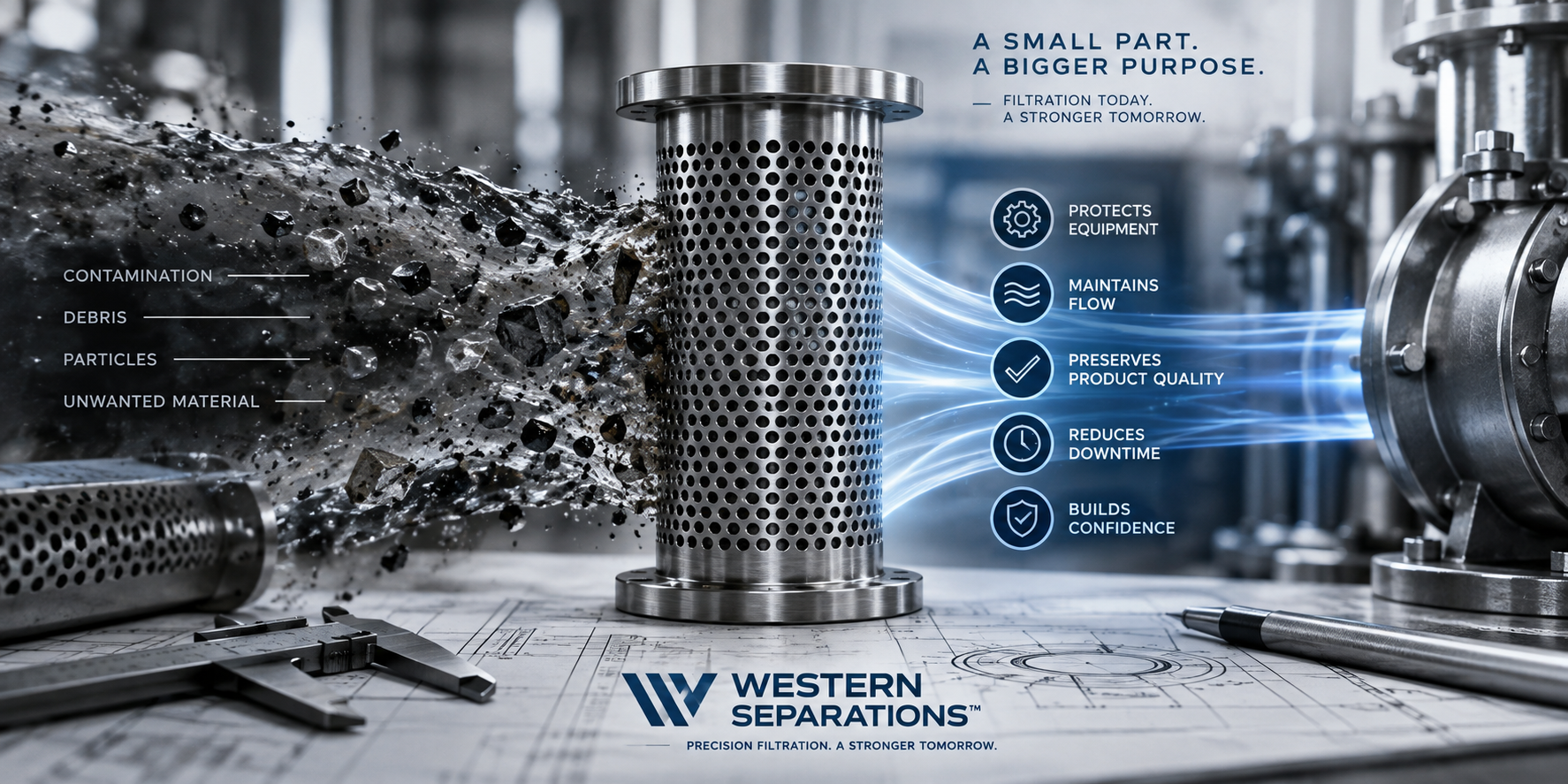
The Five Things Your Filtration Component May Be Protecting
A good filtration or separation component may protect more than one thing at once.
Here are five areas worth thinking through.
1. It Protects Equipment
This is often the most obvious role.
A strainer, screen, basket, or filter element may protect equipment from particles, debris, or unwanted material that could cause wear, clogging, scoring, sticking, or failure.
The protected equipment may include:
Pumps
Valves
Nozzles
Spray systems
Meters
Heat exchangers
Analyzers
Instruments
Hydraulic components
Process equipment
Downstream filtration stages
If the component fails to protect the equipment, the damage may show up somewhere else.
That is why a filtration part should not be judged only by its own condition.
Ask what it is guarding.
If a small part protects an expensive asset, it deserves more attention than its size suggests.
Question to ask:
What equipment depends on this component doing its job correctly?
2. It Protects Flow
Flow is easy to take for granted until it changes.
A component that is too restrictive may reduce flow.
A component that plugs too quickly may create pressure issues.
A component with too little open area may force the system to work harder.
A component with the wrong openings may fail to separate properly.
A component that is not built to the application may create inconsistent performance.
Flow problems can create confusion because they may not look like a part problem at first.
The team may see reduced output.
The pump may work harder.
The system may lose efficiency.
Operators may need to clean the part more often.
Maintenance may chase symptoms instead of the cause.
This is where design details matter.
Hole size matters.
Mesh size matters.
Open area matters.
Geometry matters.
Fit matters.
Material matters.
Cleanability matters.
The goal is not just to stop unwanted material.
The goal is to do that while allowing the process to keep moving.
Question to ask:
Is this component helping the process flow, or is it quietly becoming a restriction point?
3. It Protects Product Quality
In many industries, filtration and separation components help protect the product itself.
They may help keep unwanted material out of the product stream.
They may support consistency.
They may help maintain cleanliness.
They may help protect batch quality.
They may reduce contamination risk.
They may support downstream processing.
This matters in food and beverage, chemical processing, water and process systems, medical-related applications, industrial manufacturing, and other environments where the final product or process output must meet expectations.
A component that technically “fits” but does not perform correctly may create quality issues that are much more expensive than the component itself.
That is why the application matters.
What is the media?
What needs to be removed?
What is allowed to pass?
What particle size matters?
How is the part cleaned?
What happens if material gets through?
Is the part protecting a final product, an intermediate process, or downstream equipment?
Quality is not only controlled at the end.
Sometimes it is protected by small components along the way.
Question to ask:
What quality issue could appear if this component stopped doing its job?
4. It Protects Uptime
Downtime is not always caused by the biggest machine.
Sometimes downtime starts with the part nobody planned for.
A small component fails.
There is no spare.
The drawing is missing.
The part number does not work.
The supplier cannot help.
The equipment is old.
The standard catalog option does not fit.
The part has to be cleaned, repaired, modified, or improvised.
Now the line is waiting on a small component.
This is why hard-to-source filtration and separation parts should be treated with respect before they fail.
If a part can stop the process, it is not minor.
It is critical.
The best time to create a replacement path is before the emergency.
That may mean documenting the part, photographing it, measuring it, identifying the material, keeping a spare, or working with a custom component partner who can review the part from a sample, drawing, photo, CAD file, or worn component.
Question to ask:
If this part failed tomorrow, would we know exactly how to replace it?
5. It Protects Confidence
This may be the most overlooked benefit.
When teams know their critical parts are understood, documented, and supported, the operation feels different.
Maintenance is not guessing.
Purchasing is not starting from zero.
Engineering is not trying to reverse-engineer a mystery under pressure.
Operations is not waiting for answers.
Leadership is not wondering why a small component became a large problem.
Confidence matters.
A reliable filtration or separation component is not just a physical item.
It is part of a system of trust.
The team knows what the part does.
The team knows why it matters.
The team knows what information is needed.
The team knows who can help.
The team knows there is a path forward.
That confidence is valuable.
It reduces panic.
It improves planning.
It supports better maintenance.
It makes repeat orders easier.
It helps keep critical systems moving.
Question to ask:
Does our team have confidence in this part, or are we relying on hope?
The “Line of Defense” Test
Here is a simple test for any filtration or separation component in your operation.
Ask these questions:
What is this part protecting?
What happens if it fails?
What happens if it clogs?
What happens if it allows material to bypass?
What happens if it is made from the wrong material?
What happens if it cannot be replaced quickly?
What equipment is downstream?
What quality issue could appear?
What maintenance problem could repeat?
What would we do if the supplier could no longer provide it?
If those questions create concern, the component deserves a closer look.
It may be a small part.
But it may be protecting something much larger.
When “Good Enough” Becomes Expensive
There are times when an off-the-shelf replacement works perfectly.
There are also times when “close enough” becomes expensive.
A replacement screen that does not seal correctly may allow bypass.
A basket with the wrong dimensions may be difficult to install or remove.
A filter element with the wrong opening size may fail to protect downstream equipment.
A perforated tube with the wrong open area may restrict flow.
A material mismatch may lead to corrosion or early failure.
A weak construction detail may not survive cleaning, pressure, temperature, or vibration.
The danger is that the problem may not show up immediately.
The part may install.
The system may run.
Everything may look fine for a while.
Then the issue appears as a maintenance problem, performance problem, quality problem, or failure somewhere else.
That is why a custom part should be reviewed around the application, not just the dimensions.
Fit matters.
Flow matters.
Filtration matters.
Finish matters.
Failure history matters.
The right component is the one built for the job it has to do.
What Engineers and Maintenance Teams Should Ask Before Replacing a Filtration Component
Before replacing a custom or hard-to-source filtration component, ask better questions.
Not just:
“Can someone make this?”
Ask:
What is this component protecting?
What flows through it?
What does it need to catch, separate, support, or control?
What happens downstream if it performs poorly?
What material does the environment require?
Is the current part failing for a reason?
Is the replacement expected to be cleaned and reused?
Does the component need to survive pressure, temperature, corrosion, abrasion, or vibration?
Is the part standard, modified, obsolete, or fully custom?
Do we need one replacement, a spare, or repeat production?
Do we have a drawing, sample, CAD file, photo, measurement, or worn part?
These questions help turn a vague request into a useful project.
They also help everyone involved speak the same language.
Maintenance can explain the real-world problem.
Engineering can explain the application.
Purchasing can explain sourcing and lead time needs.
Operations can explain urgency.
Western Separations can help review the part and determine the next step.
That is how a better partnership starts.
A Simple Example: The Screen Before the Pump
Imagine a manufacturer has a stainless steel screen before a pump.
The screen catches debris from a process stream.
For years, it has done its job quietly.
Then the team notices the pump needs more attention.
The screen is plugging faster than it used to.
The part is worn at the edge.
There is no spare on the shelf.
The original supplier is unclear.
A standard replacement is almost the right size but not exact.
At first, this may seem like a screen problem.
But it is actually a protection problem.
The screen is protecting the pump.
The screen is protecting flow.
The screen is protecting uptime.
The screen is protecting maintenance from repeated emergency work.
Now the question becomes:
Is the current screen still the right design for the process?
Should the material be reviewed?
Should the fit be improved?
Should the open area be checked?
Should the failure point be reinforced?
Should a duplicate be made?
Should spares be created before the next failure?
That is the difference between replacing a part and solving a problem.
A Simple Example: The Filter Before the Analyzer
Now imagine an analyzer in a process system.
The analyzer is sensitive.
It depends on the sample stream being properly filtered.
A small filter element protects that instrument.
If the element is wrong, damaged, clogged, or unavailable, the issue may not look dramatic at first.
But the impact can be serious.
Readings may become unreliable.
Maintenance may increase.
The analyzer may need service.
The process team may lose confidence in the data.
The plant may spend time troubleshooting the wrong issue.
Again, the filter is not just a consumable.
It is a line of defense for information, control, and confidence.
That small component helps protect the quality of the decision being made downstream.
That matters.
What Western Separations Helps With
Western Separations supports customers with custom filtration and separation components built around real-world requirements.
That may include:
Custom filtration components
Custom separation components
Replacement screens
Strainer baskets
Filter baskets
Perforated tubes
Slotted tubes
Mesh elements
Analyzer and instrument filtration
Process internals
Media support components
Diffusers
Nozzles
Cones
Venturis
Custom metal components
Hard-to-source parts
Obsolete components
Duplication from drawings or samples
Short-run and repeat production needs
If you have a drawing, CAD file, PDF, scanned print, sample, photo, measurement set, or worn component, we can help review the details and determine the next step.
You do not need to have every answer before reaching out.
Start with what you have.
The Best Partnerships Start Before the Emergency
A good supplier relationship is not only about getting a quote.
It is about knowing who to call when the part matters.
When a component protects uptime, quality, equipment, or flow, the supplier relationship matters too.
You want a partner who understands that this is not just about metal.
It is about your process.
It is about your people.
It is about your equipment.
It is about your schedule.
It is about your customer.
It is about getting the line working beautifully and strongly.
That is the work.
And that is the responsibility.
At Western Separations™, we take that seriously.
We are here to help companies solve real component problems with clarity, care, and practical manufacturing support.
Before You Replace the Part, Ask What It Protects
The next time your team looks at a screen, basket, filter element, perforated tube, or custom separation component, do not only ask what it costs.
Ask what it protects.
That answer may reveal its true value.
If it protects equipment, flow, product quality, uptime, or confidence, then it deserves to be sourced, built, and supported with intention.
A small part can carry a big responsibility.
And when that part is custom, obsolete, worn, or hard to source, Western Separations can help you find the path forward.
Have a filtration or separation component that protects something important?
Send us your drawing, sample, CAD file, photo, measurement, or worn part.
We will help review what you have and determine the next step.
The Part Nobody Thinks About Until the Line Goes Down
Western Separations™ Resource Series
Small filtration and separation components often go unnoticed until they fail. Learn how to identify, document, duplicate, and replace hard-to-source parts before they create downtime, sourcing delays, or system performance issues.
A Practical Guide to Hard-to-Source Filtration & Separation Components
Western Separations™ Resource Series
In every plant, lab, production line, and processing system, there are parts that get all the attention.
The pump.
The motor.
The vessel.
The control panel.
The major piece of equipment everyone knows by name.
Then there are the parts nobody thinks about.
The screen.
The basket.
The strainer.
The perforated tube.
The filter element.
The diffuser.
The cone.
The nozzle.
The small stainless component buried inside the system that quietly keeps everything flowing, separating, protecting, and performing.
Most of the time, that part is invisible.
Until it fails.
And when it fails, everything suddenly becomes very visible.
Production slows down. Maintenance starts searching. Purchasing starts calling. Operators start asking how long it will take. The original supplier may no longer exist. The part number may not be clear. The equipment may be older. The drawing may be missing. The replacement may not be sitting on a shelf anywhere.
That small part can become a very big problem.
At Western Separations™, we help companies solve that exact challenge: custom filtration and separation components built to spec, duplicated from drawings or samples, and delivered with clarity from start to finish.
This article is for the people responsible for keeping critical systems moving: plant managers, maintenance teams, sourcing teams, buyers, OEMs, operations leaders, and technical teams who know that reliability is not built from one major component alone.
Reliability is built from every detail.
Why Small Filtration Components Carry Big Responsibility
Filtration and separation components are often treated like simple replacement parts.
But in real applications, they do far more than “catch debris.”
They protect downstream equipment.
They help maintain product quality.
They support clean fluid, air, gas, or process flow.
They reduce contamination risk.
They help systems run longer between service intervals.
They protect pumps, valves, instruments, analyzers, and sensitive equipment.
They help keep production consistent.
A well-built component can quietly protect an entire process.
A poorly matched component can create problems that spread through the system.
That is why the details matter: material, fit, hole pattern, mesh size, open area, flow path, wall thickness, end connections, temperature exposure, pressure requirements, chemical compatibility, cleanability, and overall function.
The part may look simple from the outside.
But when it lives inside a critical system, simple is not the same as unimportant.
The Real Problem: The Part Exists, But the Supply Path Disappeared
One of the most common situations companies face is not that the part is impossible to make.
It is that the path to get the part has disappeared.
Maybe the original manufacturer discontinued it.
Maybe the supplier no longer supports that equipment.
Maybe the part was private-labeled years ago.
Maybe the part number leads nowhere.
Maybe the drawing is missing.
Maybe the lead time is too long.
Maybe the current replacement is close, but not close enough.
Maybe the line was built around an older system that still works well, but now one internal component is holding everything hostage.
This is where many teams lose time.
They search catalogs.
They call distributors.
They dig through old folders.
They compare photos.
They request quotes for “something similar.”
They try to make an off-the-shelf part work.
They wait.
Meanwhile, the real question is much simpler:
Can the part be recreated correctly?
In many cases, yes.
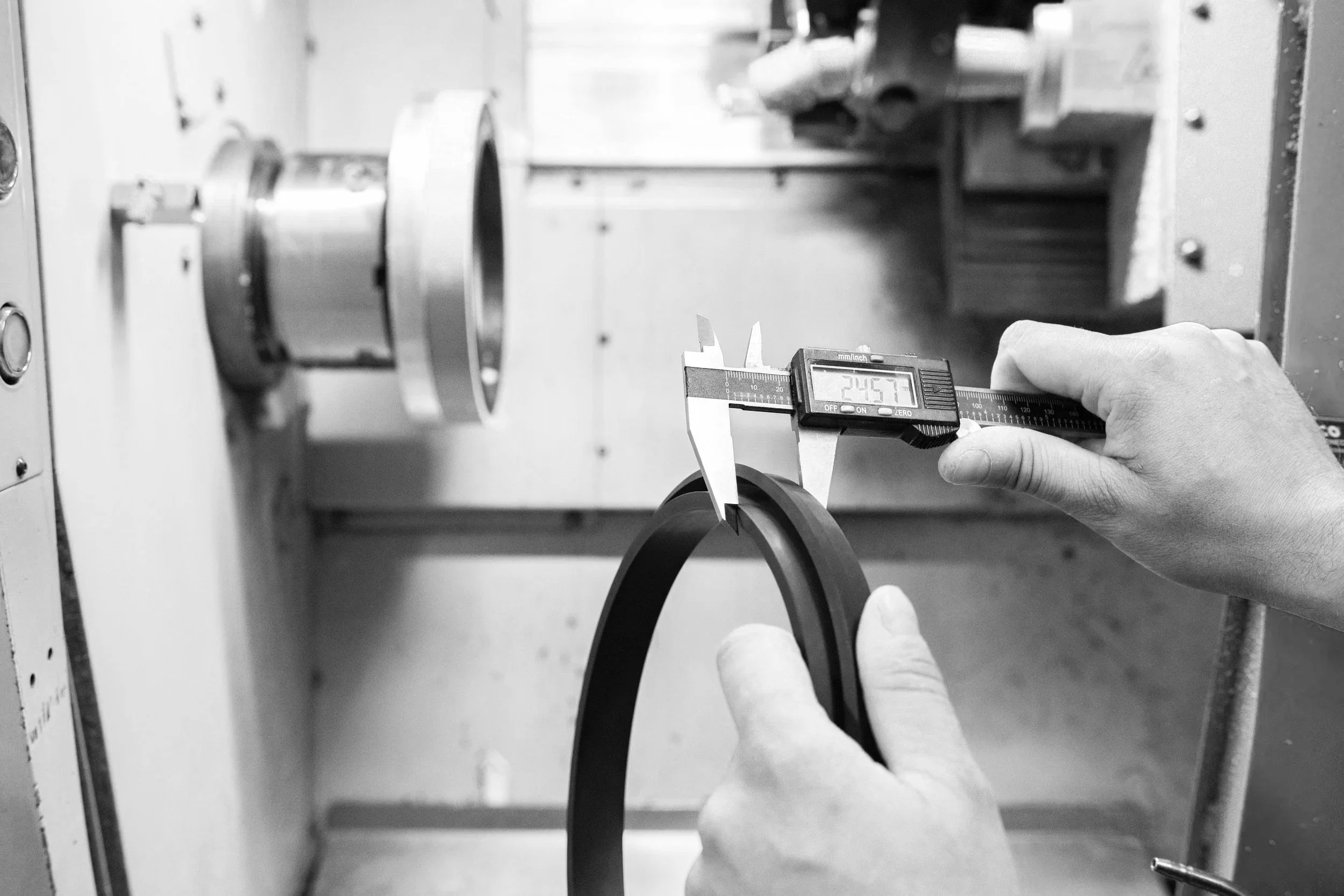
If there is a usable drawing, sample, sketch, photo, measurement set, or non-returnable part, a custom replacement can often be built to match the form, fit, and function needed for the application.
That is the value of duplication services.
Not copying for the sake of copying.
Restoring a reliable supply path for a component your operation still depends on.
When “Close Enough” Is Not Good Enough
In industrial filtration and separation, “close enough” can become expensive.
A filter basket that is slightly undersized may bypass material.
A screen that is too restrictive may reduce flow.
A hole pattern with poor open area may create pressure drop.
A metal that is not compatible with the environment may corrode too quickly.
A weak seam may fail under vibration or repeated cleaning.
A poor fit may make installation harder, slower, or less reliable.
A part that looks right but performs wrong can create recurring maintenance headaches.
This is why replacement components should not be judged by appearance alone.
The goal is not simply to make something that looks like the original.
The goal is to understand what the component is supposed to do.
What is it separating?
What is flowing through it?
What pressure or temperature is it exposed to?
Is it cleaned, replaced, or reused?
Does it support media?
Does it protect an instrument?
Does it sit inside a larger housing?
Does it need to meet a certain finish, material, or dimensional requirement?
Is the original part failing because of wear, corrosion, plugging, cracking, deformation, or fatigue?
The answer to those questions can change the final part.
A better replacement starts with better understanding.
Five Signs You May Need a Custom or Duplicated Component
Not every replacement requires a custom solution. Sometimes a standard part works perfectly.
But there are clear signs that a custom-built or duplicated component may be the smarter path.
1. The part is obsolete or discontinued
If the original supplier no longer offers the component, the next best move is not always a risky substitute. A duplicated part can help extend the life of proven equipment without forcing a larger system change.
2. The part has no clear part number
Many older components are unmarked, private-labeled, modified, or built into equipment packages where part identification becomes difficult. A sample or drawing can often speak louder than a missing number.
3. Off-the-shelf options almost fit, but not quite
Almost fitting is often where problems begin. If the part has to be modified repeatedly, forced into place, or adjusted in the field, a custom part may reduce frustration and improve repeatability.
4. The application has unusual requirements
High temperature, aggressive chemicals, sanitary needs, vibration, high flow, tight spaces, special connections, or unique geometry can make standard options too limited.
5. Downtime costs more than doing it right
If failure stops production, threatens quality, damages equipment, or creates emergency sourcing, the value of a reliable replacement is much larger than the part itself.
What to Gather Before Requesting a Custom Quote
A strong quote starts with strong information.
You do not need everything perfect before reaching out, but the more detail you provide, the faster and cleaner the review process can be.
Here is a practical checklist.
Helpful information to provide:
1. A drawing or sketch
A CAD file, PDF, scanned print, or even a clearly labeled sketch can be useful.
2. Photos of the part
Include multiple angles, close-ups of connections, damaged areas, seams, openings, and any identifying marks.
3. A non-returnable sample
For duplication work, a physical sample is often the best way to confirm fit, shape, and construction details.
4. Basic dimensions
Length, diameter, wall thickness, hole size, mesh size, connection points, flange dimensions, thread details, and any critical tolerances.
5. Material requirements
If known, include the current material or desired material, such as stainless steel or another performance-grade metal.
6. Application notes
What does the part do? What flows through it? Is it liquid, gas, air, powder, oil, chemical, food product, or another process media?
7. Operating conditions
Temperature, pressure, cleaning method, chemical exposure, vibration, duty cycle, and installation environment all matter.
8. Quantity needed
One replacement part, a small run, ongoing supply, or production quantities.
9. Urgency
Is this a planned replacement, a maintenance spare, or an urgent downtime issue?
The goal is simple: make the unknowns known.
Once the details are clear, the path forward becomes easier.
Why Duplication Is Not Just for Emergencies
Many companies only think about duplication when something breaks.
But the smartest teams use duplication before the emergency.
A duplicated component can become part of a better spare parts strategy. Instead of waiting until a critical part fails, teams can identify vulnerable components early and create a reliable source before the next shutdown.
This is especially valuable for:
Legacy equipment
Imported systems with long lead times
Private-labeled components
Specialty filtration assemblies
Analyzer and instrument protection
Sanitary processing components
Custom screens, strainers, tubes, baskets, and housings
Parts with no current distributor support
Applications where one small failure can stop a much larger process
A good spare part strategy is not about storing everything.
It is about knowing which parts are too important to ignore.
If one component can stop the line, damage equipment, or create a sourcing scramble, it deserves attention before it fails.
The Hidden Cost of Waiting
The cost of a hard-to-source component is rarely just the price of the part.
The true cost may include:
Lost production time
Expedited shipping
Emergency labor
Temporary fixes
Reduced system performance
More frequent maintenance
Quality issues
Scrap or rework
Equipment damage
Repeated sourcing effort
Stress on operations and purchasing teams
A part that seems small on a purchase order can become expensive when it is unavailable at the wrong time.
This is why the best time to solve a sourcing problem is before it becomes urgent.
If you already know a component is hard to replace, now is the time to document it, duplicate it, or create a backup supply path.
What Makes a Better Custom Filtration Partner?
When choosing a partner for custom filtration or separation components, look beyond the basic question of “Can you make this?”
The better question is:
Can they make the process clear?
A strong partner should be able to:
Review drawings or samples
Ask practical questions
Clarify material and application needs
Help identify critical dimensions
Support one-off, short-run, or repeat needs
Communicate clearly
Keep the process moving
Build to your requirements
Deliver parts ready for use
Help reduce the burden on your team
In other words, the right partner should not create more confusion.
They should help remove it.
For many companies, the challenge is not only fabrication. It is coordination. The technical team has one piece of information. Maintenance has another. Purchasing has another. Operations has the urgency. The supplier has questions.
Western Separations™ exists to help bring that information into one clear process.
From drawing to delivery, the goal is to make custom filtration and separation components easier to source, easier to understand, and easier to trust.
A Better Way to Think About Replacement Parts
The old way of thinking says:
“It is just a small part.”
The better way says:
“This part protects the system.”
That shift matters.
A strainer is not just a strainer if it protects a pump.
A screen is not just a screen if it maintains product quality.
A perforated tube is not just a tube if it supports media inside a process.
An analyzer filter is not just a filter if it protects measurement accuracy.
A replacement component is not just a purchase if it helps prevent downtime.
The value of the part is connected to the value of the process it protects.
That is why Western Separations™ focuses on precision, reliability, and clean execution.
Because details matter.
And in filtration and separation, the smallest detail can carry the biggest responsibility.
What Western Separations™ Can Help With
Western Separations™ provides custom filtration and separation components for a wide range of industrial applications, including:
Liquid and fluid filtration
Air and gas separation
Process internals and media support
Custom metal components
Analyzer and instrument filtration
Perforated and slotted tubes
Screens, strainers, and mesh elements
Housings, fittings, and enclosures
Diffusers, cones, venturis, and nozzles
Obsolete or hard-to-source replacement parts
One-off prototypes and small-run builds
Precision duplicates from samples or drawings
Whether you have a complete drawing, an old sample, a damaged part, or only a starting point, the next step is a conversation.
Before Your Next Line-Down Emergency, Look for the Quiet Parts
Every operation has a few parts that do quiet work.
They are not flashy.
They are not always expensive.
They are not always easy to identify.
But they matter.
The question is not whether your system has parts like this.
It does.
The question is whether you know which ones they are.
Take a look at your most critical systems. Find the components that would be difficult to replace quickly. Look for the custom screens, strainers, tubes, baskets, filter elements, housings, and internal parts that nobody thinks about until they fail.
Then ask:
Do we have a spare?
Do we have a drawing?
Do we know the material?
Do we know the supplier?
Do we know the lead time?
Could this part be duplicated before it becomes urgent?
That small review can save a large headache later.
Ready to Source a Hard-to-Find Component?
If you have a worn, obsolete, custom, or difficult-to-source filtration or separation component, Western Separations™ can help.
Send us your drawing, sample, photos, or project details, and we will review the requirements with you.
From one-off replacements to repeat production needs, we help companies move from uncertainty to a clear path forward.
Start your request today:
Upload your drawing, send your sample details, or request a quote through WesternSeparations.com.
Western Separations™
Custom Filtration & Separation Solutions—for Every Industry
From drawing to delivery—your part, built to perform.